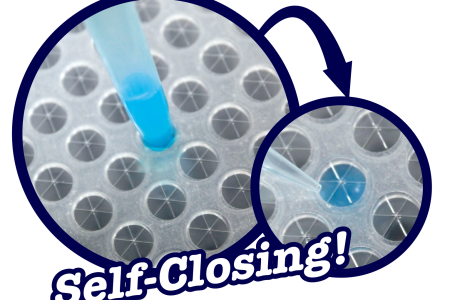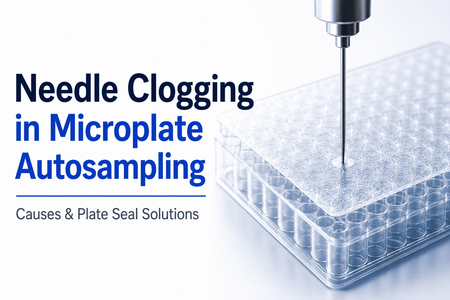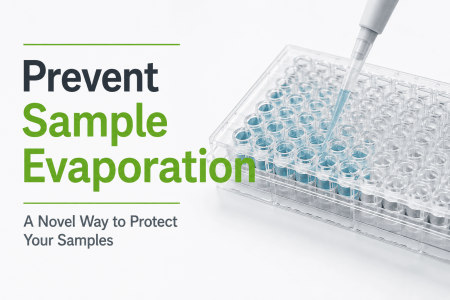
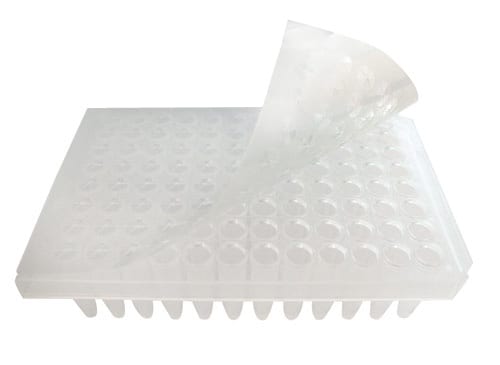
RAPID Slit Seal™ is a plate seal designed for repeated LC/MS and autosampler sampling. Its pre-slit design provides easy sample access and returns after needle withdrawal, while the adhesive-free area above each well helps reduce adhesive contact and sample evaporation—helping preserve samples for next-day and repeated analysis.
 Powered by Bioz
Use our general contact form to request a sample. Product inquiries are also welcome.
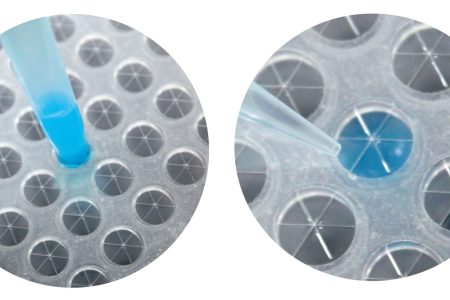
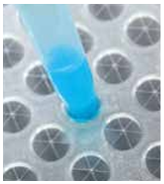
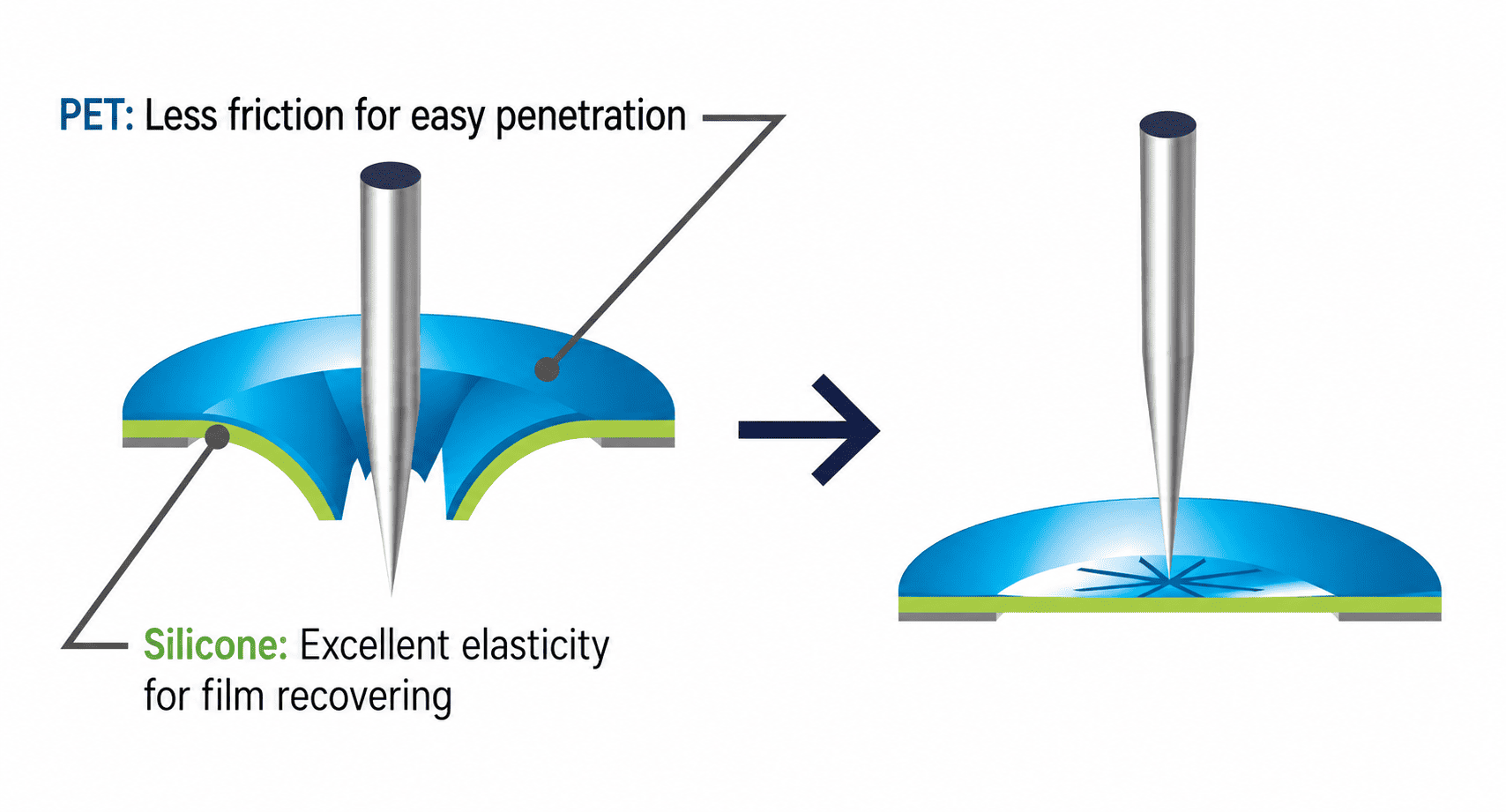
1. Insert
2. Withdraw
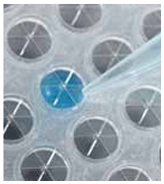
Opens during sampling and returns toward its original position after withdrawal.
How RAPID Slit Seal™ Works
See how the pre-slit design provides sample access while helping limit evaporation and adhesive contact.
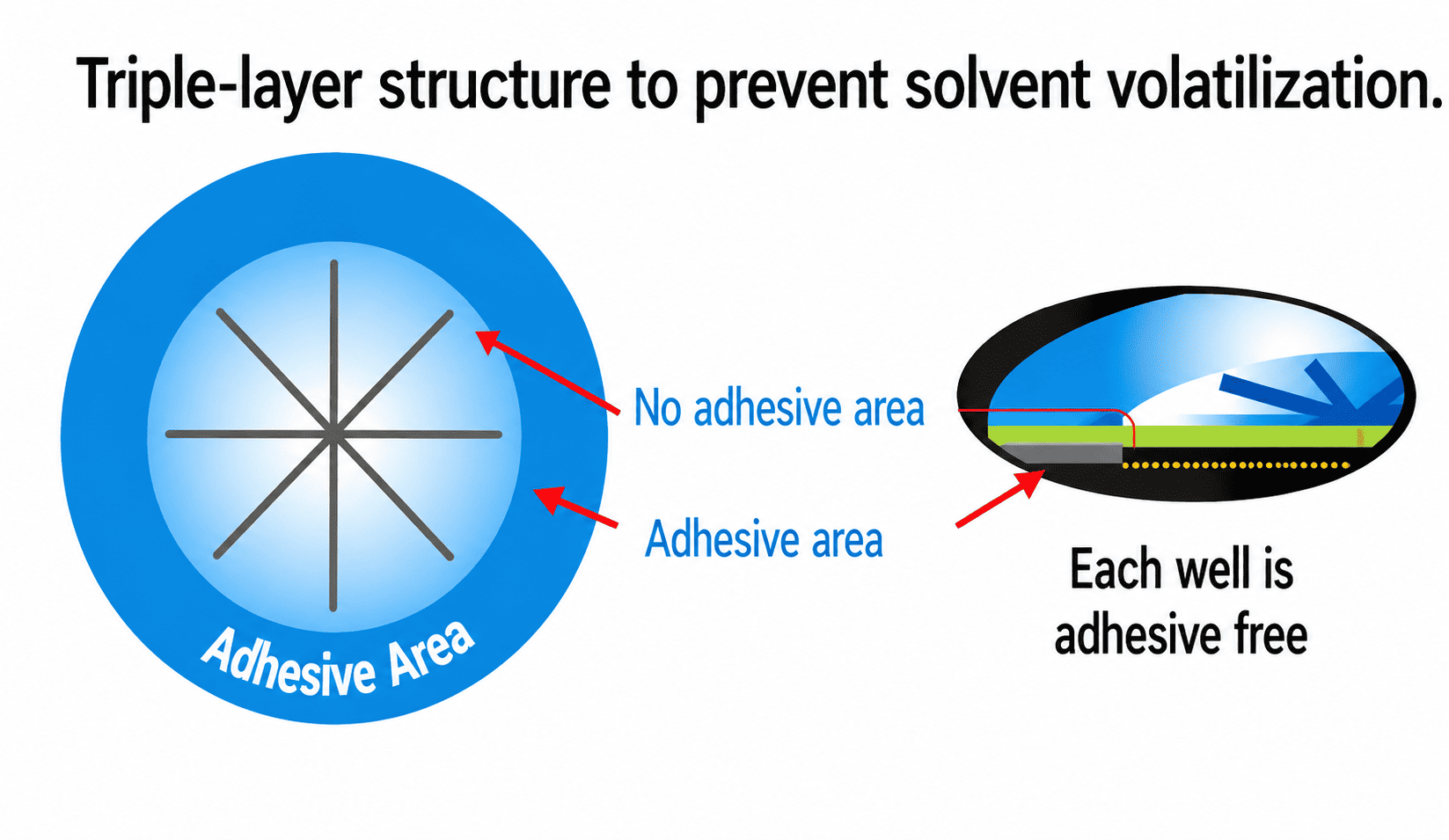
No Adhesive Above Each Well
Adhesive is positioned around each well, leaving the well opening adhesive-free. This helps reduce adhesive contact with samples, pipette tips, and autosampler needles.
Opens During Sampling and Returns After Withdrawal
The pre-cut slit opens during pipette or needle insertion, while the PET layer helps reduce friction. After withdrawal, the slit returns toward its original position, helping reduce evaporation between sampling steps.
Applications for RAPID Slit Seal™
- ✓ HPLC & LC/MS — repeated sampling and analysis
- ✓ Automated Pipetting & Liquid Handling — automated or repeated pipetting
- ✓ Cell Culture & Incubation — microplate-based cell workflows
- ✓ Biochemical Assays — plate-based assay workflows
- ✓ DNA Extraction — microplate sample preparation
- ✓ SPE & ADME — sample preparation and screening workflows
- ✓ Automated Single Molecule Imaging — automated microplate imaging
- ✓ Vortex Mixing — sealed plate mixing workflows
RAPID Slit Seal™ Specifications
| Product | RAPID Slit Seal™ |
|---|---|
| Catalog No. |
Outside the U.S.
RSS-S96-80122 — 100 sheets / box
RSS-S96-10 — 10 sheets / box
U.S.
R80.120.00 — 100 sheets / box
R80.120.10 — 10 sheets / box |
| Size | 80 mm × 122 mm (96-well format) |
| Material | PET, silicone |
| Adhesive | Acrylic-based adhesive, with no adhesive directly above the well openings |
| Functional Temperature Range | −80°C to +100°C |
| Instrument Use Examples |
Nano Space (Osaka Soda) Shimadzu Prominence Shimadzu Nexera i-Series LC-2040C 3D Waters ACQUITY UPLC CTC Analytics PAL-HTC Agilent 1100 / 1200 / 1290 Series ProteinSimple Maurice — cIEF applications
For ProteinSimple Maurice, plate seals are not recommended for CE-SDS applications.
|
| PCR Compatibility | No PCR inhibition |
| DNA-Free Certification | Available on request. Contact us for details → |
TRY RAPID SLIT SEAL™ IN YOUR WORKFLOW
Request a Free Sample
Use our contact form to request a RAPID Slit Seal™ sample. Product questions and application inquiries are also welcome.
Request a Free SampleYou will be directed to our general contact form.
RAPID Slit Seal™ vs. Common Plate Sealing Options
Plate sealing methods differ in sealing performance, repeated sample access, automation compatibility, and cost. For reusable options such as silicone mats, actual cost per use depends on reuse and cleaning requirements.
| Solution | Evaporation Prevention | Repeated Sample Access | Automation Compatibility | Cost & Reuse |
|---|---|---|---|---|
| Conventional Adhesive Plate Seal | Good | Seal may need to be removed or peeled back | Depends on seal type | Typically single-use |
| Foil Seal | Good | Often intended for single use; piercing may leave an opening | Depends on pierceability and instrument setup | Typically single-use |
| Silicone Mat | Good | Pre-slit types can support repeated access | Depends on mat and instrument setup | Reusable; higher initial cost |
| RAPID Slit Seal™ | Designed to reduce evaporation during repeated sampling | No seal removal required for pipette or needle access | Suitable for automated sampling workflows | Single-use; lower cost than silicone mats |
In-House Performance Testing
BioChromato evaluated RAPID Slit Seal™ on a 96-well plate to examine solvent evaporation before and after needle access.
Evaporation After Needle Access
Under the tested conditions, solvent loss was 7.7% before needle access and 8.2% after one needle insertion, indicating similar evaporation performance before and after access.
View Full Test Data →Used in Published Research
RAPID Slit Seal™ has been referenced in published research. Bioz tracks citations and research use of laboratory products, providing an independent view of how the product has been used in scientific workflows.
TRY RAPID SLIT SEAL™ IN YOUR WORKFLOW
Request a Free Sample
Use our contact form to request a RAPID Slit Seal™ sample. Product questions and application inquiries are also welcome.
Request a Free SampleYou will be directed to our general contact form.
Frequently Asked Questions
Can RAPID Slit Seal™ be pierced with pipette tips or autosampler needles?
What types of 96-well plates are compatible with RAPID Slit Seal™?
Does the adhesive contact the sample above each well?
Which autosamplers have been used with RAPID Slit Seal™?
What is the functional temperature range of RAPID Slit Seal™?
Can RAPID Slit Seal™ be autoclaved?
How should RAPID Slit Seal™ be stored?
Can I request a free sample before purchasing?
Looking for more technical questions? View the full RAPID Slit Seal™ FAQ →
RELATED PLATE SEAL
Looking for an Easy-Piercing Adhesive Plate Seal?
RAPID EPS is a solvent-resistant adhesive plate seal with an embossed surface designed for easy needle and pipette-tip penetration. Consider RAPID EPS for workflows where organic solvent resistance, reliable adhesion, and clean removal are important.
Explore RAPID EPS →