Faster, Simpler Teaching Labs: Santa Monica College Case Study
Post date : April 08, 2026 Update date : April 08, 2026
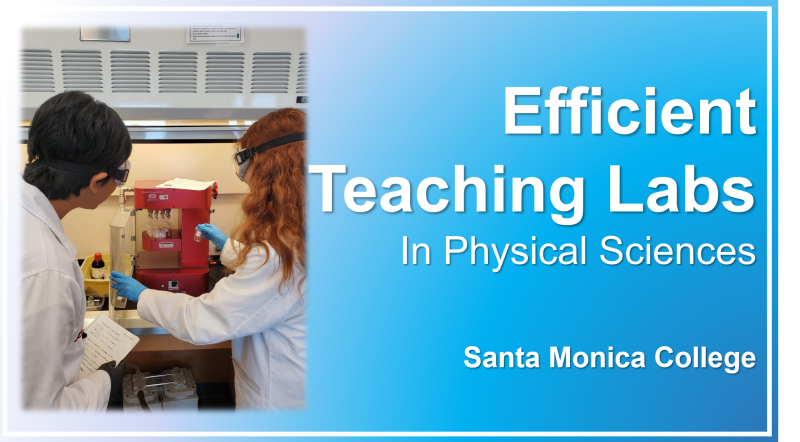
In undergraduate chemistry labs, evaporation often becomes a bottleneck. The Santa Monica College case shows how Smart Evaporator C10 helped students evaporate solvents quickly, work in parallel, and use lab time more efficiently.
Quick answer: Smart Evaporator C10 enabled simultaneous evaporation of up to ten 20 mL vials, allowing students to complete solvent removal in about 10–15 minutes at 40 °C while operating the system themselves during class.
Need technical details for your lab?
Download Smart Evaporator™ brochure →
Table of Contents
- Why this case matters
- What Santa Monica College said
- Why evaporation is difficult in teaching labs
- What changed with Smart Evaporator™
- Comparison
- FAQ
- Conclusion
Why This Case Matters for Lab Efficiency
In teaching labs, evaporation steps often slow down lab progress when multiple students must share equipment. In practice, efficiency depends not only on evaporation speed but also on how many samples can be processed in parallel and how easily students can operate the system.
What Santa Monica College Said
According to Professor Timothy Dong, the Smart Evaporator C10 was a “game changer” for undergraduate chemistry education. For example, the system allowed ten 20 mL vials to be processed simultaneously, enabling solvent removal in about 10–15 minutes at 40 °C.
In addition, students operated the device themselves by simply lifting and lowering the heating block stage. Compared with other evaporation methods that may require adjustments or closer attention, this straightforward operation helped improve workflow efficiency and reduce instructor involvement.
Want to see how this works in practice?
Explore Smart Evaporator™ (Product Page)
Why Evaporation Is Difficult in Teaching Labs
However, evaporation becomes more challenging in teaching labs due to several practical constraints:
- Limited class time
- Multiple samples need parallel processing
- Students require simple operation
- Instructor supervision is limited
These factors make conventional evaporation methods less efficient in classroom environments.
What Changed With Smart Evaporator™
As a result, several practical improvements were observed after introducing the Smart Evaporator C10.
Safe and Simple Parallel Evaporation
Multiple samples can be evaporated in parallel with minimal setup, reducing waiting time and simplifying workflow.
Short evaporation time
Typical solvents can be removed in about 10–15 minutes, supporting time-limited lab sessions.
Student operation
Students can add and remove samples themselves, improving workflow efficiency.
Need technical details for your lab?
Download Smart Evaporator™ brochure →
Comparison
Sample count alone does not determine usability in teaching labs. Ease of use and practical workflow handling are equally important when multiple samples must be processed in class.
Some evaporation methods can accommodate a larger number of samples at once. However, in undergraduate teaching environments, practical usability also depends on how easily students and instructors can operate the system and manage routine workflows.
| Method | Sample Processing Capacity | Ease of Use (Key Advantage) | Practical Parallel Capability | Teaching Lab Fit |
|---|---|---|---|---|
| Rotary Evaporator | Low | Medium | Low | Limited |
| Nitrogen Blowdown | High | Medium | Medium | Moderate |
| Centrifugal Evaporator | High | Medium | Medium-High | Moderate |
| Smart Evaporator | Medium | Excellent | High | Excellent |
In this comparison, Smart Evaporator stands out not because it handles the highest number of samples, but because it combines simple operation with practical parallel use, making it especially well suited to teaching lab workflows.
FAQ
How many samples can be processed?
Up to ten vials (including 20 mL and smaller sizes) can be processed simultaneously.
How fast is evaporation?
About 10–15 minutes for common solvents at 40 °C.
Can students operate it?
Yes, students can independently handle sample placement and removal.
Conclusion
Overall, the Santa Monica College case demonstrates that evaporation workflow design directly impacts lab efficiency. As a result, Smart Evaporator™ enables parallel processing, simple operation, and better use of limited lab time.
Need technical details for your lab?
Download Smart Evaporator™ brochure →