
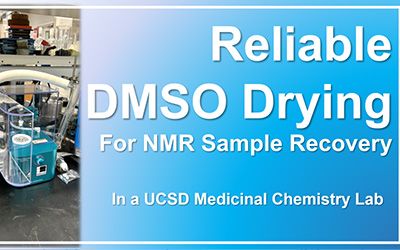
Looking to evaporate DMSO safely? While rotary evaporators can remove DMSO, the final stage often becomes sensitive to pressure changes…
Removing DMF (N,N-Dimethylformamide) is a common but technically demanding step in analytical and synthetic workflows. Because DMF is a high-boiling solvent, evaporation can…
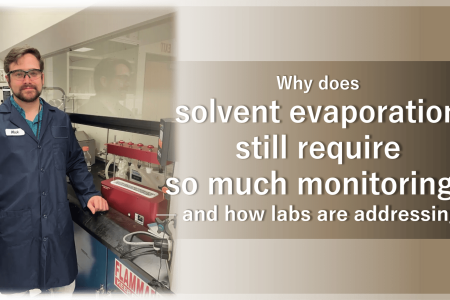
Solvent evaporation is a routine step in many analytical workflows, from environmental testing to materials and pharmaceutical research. Removing solvent…

In undergraduate chemistry labs, evaporation often becomes a bottleneck. The Santa Monica College case shows how Smart Evaporator C10 helped…
Dimethylformamide (DMF) is a common solvent in organic synthesis, polymer science, and pharmaceutical research. However, many researchers encounter the same…
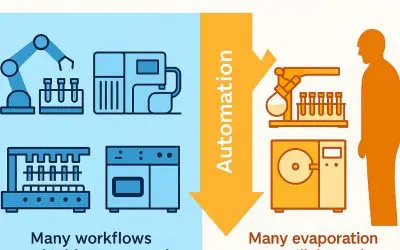
Update date : January 23, 2026 | Post date : January 23, 2026 | Blog/News , Evaporator Many modern laboratory tasks are now…
Many researchers face challenges when concentrating samples, especially when working with high-boiling solvents or small volumes. The Smart Evaporator is one option…
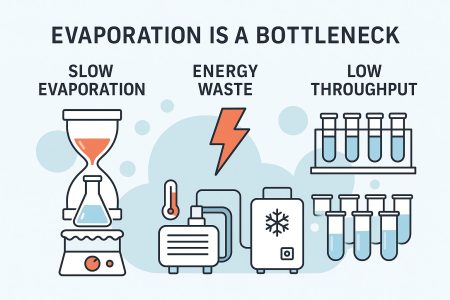
In many laboratories, synthesis, purification, and analysis are automated—yet solvent evaporation remains a manual, time-consuming bottleneck.Rotary evaporators and nitrogen blow-down…

Table of Contents 1) Executive Summary Evaporation and concentration are fundamental across chemical, pharmaceutical, and food R&D. Rotary evaporators dominate…
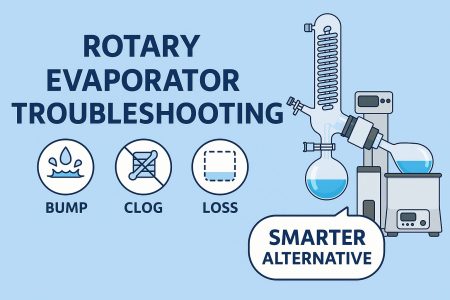
On this page Are you frustrated with your rotary evaporator? Rotary evaporators (rotovaps) are essential tools in many labs. They…

Laboratories are among the most energy-intensive facilities globally, consuming far more power per square foot than offices or classrooms. As…
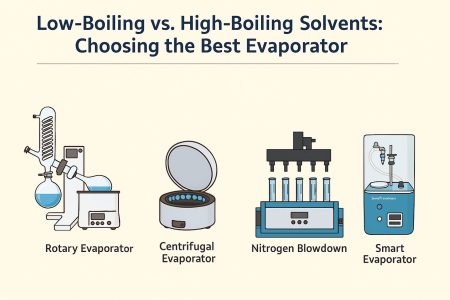
When removing solvents in the lab, selecting the right evaporation method depends not only on the solvent’s boiling point but…