
What Is a Plate Seal? Types, Applications, and Selection Guide
Post date : October 05, 2026 Update date : October 05, 2026
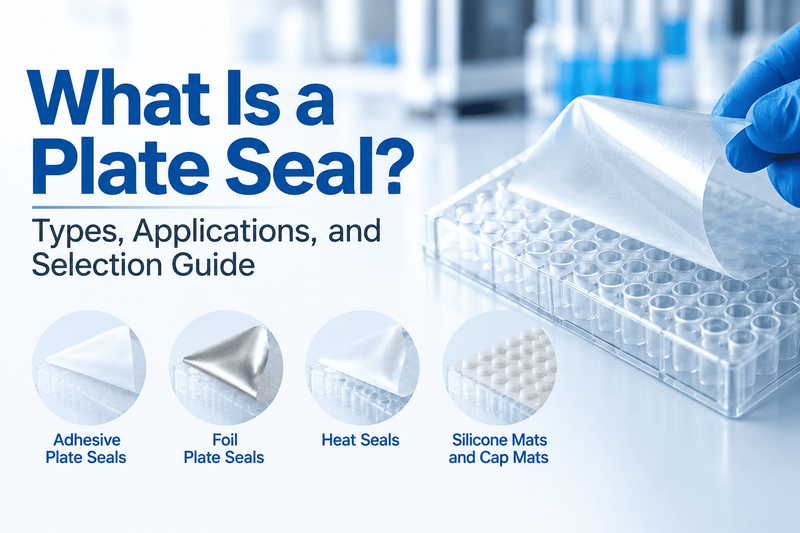
Microplates are widely used for sample preparation, storage, PCR, LC-MS analysis, and automated laboratory workflows. But once samples are placed in a plate, another decision becomes important: how should the plate be sealed?
A plate seal helps protect samples from evaporation, contamination, and unwanted exposure during storage, processing, or analysis. However, not all plate seals work in the same way. Adhesive seals, heat seals, foil seals, and silicone mats each have different characteristics, and the right choice depends on the application.
This guide explains the main types of plate seals, their typical applications, and the key factors to consider when selecting a seal for your workflow.
Table of Contents
- What Is a Plate Seal?
- Why Are Plate Seals Used?
- Main Types of Plate Seals
- Plate Seal Types at a Glance
- How to Choose the Right Plate Seal
- Choosing Plate Seals for Different Applications
- Specialized Plate Seal Designs
- Frequently Asked Questions
- Summary
What Is a Plate Seal?
A plate seal is a film, foil, mat, or other closure used to cover multi-well microplates, such as 96-well or 384-well plates. Plate seals help reduce sample evaporation and contamination and are commonly used for PCR, sample storage, LC-MS analysis, and other laboratory workflows.
The purpose of plate sealing varies by workflow. In some applications, the main concern is reducing sample evaporation. In others, researchers may need to prevent cross-contamination, protect samples during storage, withstand thermal cycling, or allow a pipette tip or autosampler needle to access the sample through the seal.
For this reason, there is no single plate seal that is best for every application.
Why Are Plate Seals Used?
Plate seals can perform several functions depending on the experiment and plate format.
- Reduce evaporation: Limiting solvent or water loss helps maintain sample concentration and volume.
- Reduce contamination: Covering wells helps protect samples from environmental contamination and can reduce the risk of cross-contamination between wells.
- Support sample storage: Appropriate sealing helps maintain sample integrity during refrigerated, frozen, or room-temperature storage, depending on the seal specification.
- Support thermal cycling: PCR and qPCR workflows require reliable sealing to limit evaporation during repeated heating and cooling cycles.
- Enable automated analysis: Some seals are designed to be pierced by pipette tips or autosampler needles, allowing direct access to samples without removing the entire seal.
The importance of each factor depends on the application. A seal selected for PCR, for example, may need different optical and temperature properties from a seal used for LC-MS sample preparation or long-term compound storage.
Evaluate an Adhesive Plate Seal in Your Own Workflow
BioChromato offers free samples so you can evaluate seal compatibility with your plate, solvent, and analytical workflow.
Main Types of Plate Seals
Plate seals can be classified in several ways, including by sealing method and material. For example, adhesive and heat sealing describe how a seal is attached to a plate, while foil describes a material that may be used with either an adhesive or heat-sealing system.
In practice, researchers commonly encounter the following options when selecting a microplate seal.
1. Adhesive Plate Seals
Adhesive plate seals use a pressure-sensitive adhesive to attach a film or foil to the surface of a microplate. They are widely used because they are simple to apply and generally do not require dedicated heat-sealing equipment.
Depending on the product, adhesive seals may be designed for sample storage, PCR, fluorescence measurements, or sample access with pipette tips and needles.
Adhesive seal performance can vary significantly depending on the formulation and design of the adhesive system. A well-designed adhesive seal can provide stable, consistent sealing when matched with the appropriate plate, solvent, and workflow.
Typical applications: PCR and qPCR, sample storage, fluorescence-based assays, and general-purpose microplate sealing where simple application without dedicated sealing equipment is preferred.
Advantages:
- Simple application
- Usually no dedicated sealing instrument required
- Available in clear film, foil, and other formats
- Many options for different temperatures and applications
Considerations:
- Seal performance depends on correct application and sufficient pressure around the wells
- Solvent compatibility varies by adhesive and seal material
- Not every adhesive seal is pierceable
- For analytical workflows, researchers may need to consider whether the needle or sample can contact the adhesive layer
2. Heat Seals
Heat sealing uses controlled heat and pressure to bond a sealing film or foil to a compatible microplate. It is commonly used when consistent, high-integrity sealing is required, including sample storage and high-throughput workflows.
Heat-seal materials are available with different properties, including peelability, pierceability, optical clarity, gas permeability, solvent resistance, and temperature resistance.
Typical applications: Sample and compound storage, PCR, high-throughput screening, and automated workflows where consistent sealing across multiple plates is important.
Advantages:
- Consistent sealing when the plate, seal, and sealing conditions are properly matched
- Suitable options are available for storage, PCR, and automated workflows
- Available with a wide range of material properties
Considerations:
- Requires compatible heat-sealing equipment
- Plate and seal materials must be compatible with the sealing conditions
- Potential effects of heat on temperature-sensitive samples should be considered
- Peelability and pierceability vary by product
3. Foil Plate Seals
Foil seals are often selected when barrier performance or pierceability is important. Aluminum foil is commonly used as a sealing material for storage, PCR, and sample-access applications.
Importantly, “foil seal” describes the sealing material rather than a single sealing method. Some foil seals use pressure-sensitive adhesive, while others are applied using heat sealing.
Typical applications: PCR, sample and compound storage, light-sensitive samples, and workflows requiring pierceable access by pipette tips or autosampler needles.
Advantages:
- Good barrier properties
- Many products can be pierced with pipette tips or needles
- Available for both adhesive and heat-sealing workflows
Considerations:
- Not transparent
- Pierceability varies by foil thickness and construction
- Piercing with a pipette tip or needle may generate foil fragments, which can potentially contribute to clogging
- Sealing method and equipment requirements depend on the specific product
4. Silicone Sealing Mats and Cap Mats
Silicone sealing mats and cap mats use a mechanical fit rather than an adhesive layer to close the wells of a compatible plate. They are commonly used with storage and deep-well plates and can be useful when repeated access to individual wells is required.
Some silicone mats are available with pre-slit designs to facilitate penetration by pipette tips or needles.
Typical applications: Sample storage, deep-well plates, and workflows requiring repeated access to individual wells, depending on the mat design.
Advantages:
- No pressure-sensitive adhesive layer
- Can provide repeated access to wells depending on design
- Some products are reusable
Considerations:
- Compatibility depends on the plate and mat design
- Correct alignment and seating are important for effective sealing
- Initial cost may be higher than some disposable film seals
- Cleaning may be required when reusable mats are used across multiple workflows
Plate Seal Types at a Glance
| Seal Type | How It Seals | Equipment | Pierceable? | What to Check |
|---|---|---|---|---|
| Adhesive film | Pressure-sensitive adhesive | Usually none | Product-dependent | Solvent compatibility, adhesive exposure, application pressure |
| Heat seal | Heat and pressure | Heat sealer | Product-dependent | Plate compatibility, sealing conditions, sample sensitivity to heat, sample access |
| Foil seal | Adhesive or heat sealing | Depends on product | Often available | Barrier requirements, optical requirements, pierceability, potential fragment generation and clogging |
| Silicone / cap mat | Mechanical fit | Usually none | Product-dependent | Plate compatibility, repeated-access capability, fit, reuse, and initial cost |
Note: These are general characteristics. Actual performance, temperature range, solvent compatibility, pierceability, and application suitability vary by individual product.
How to Choose the Right Plate Seal
Rather than selecting a plate seal by material alone, it is useful to start with the requirements of the workflow.
1. What sample or solvent will be used?
Check the chemical compatibility of both the sealing material and adhesive, particularly when working with organic solvents such as DMSO, methanol, or acetonitrile.
2. How important is evaporation control?
Even relatively small changes in sample volume can affect concentration. For PCR, evaporation can also contribute to variability and reduced reproducibility. If plates will remain sealed for extended periods, evaporation performance becomes an important selection criterion.
3. Does the seal need to be pierced?
If samples will be accessed by an autosampler needle or pipette tip, confirm that the seal is specifically designed for piercing. Consider the force required for penetration and whether piercing may generate fragments that could contribute to clogging. A seal that provides excellent storage performance is not necessarily suitable for direct needle access.
4. Will wells be accessed more than once?
Some workflows require repeated sampling from the same plate. In these cases, consider what happens to the opening after a tip or needle is withdrawn and whether evaporation protection is still required after access.
5. Is the workflow automated?
For automated liquid handling or autosampler workflows, consistent plate positioning, seal flatness, piercing characteristics, and compatibility with the instrument can all affect reliable operation.
6. What temperature range is required?
Freezer storage, room-temperature workflows, incubation, and PCR thermal cycling place very different demands on a plate seal. Always confirm the specified operating temperature range of the individual product.
Test BioChromato Plate Seals in Your Workflow
BioChromato offers free samples of RAPID EPS™ for easy piercing and solvent resistance and RAPID Slit Seal™ for repeated sample access. Test them in your own workflow.
Choosing Plate Seals for Different Applications
PCR and qPCR
PCR plate sealing is particularly important because evaporation during thermal cycling can change reaction volumes and contribute to variability. Depending on the workflow, researchers may use adhesive films, adhesive foils, heat seals, or caps.
For qPCR and other fluorescence-based measurements, optical properties are another important consideration. Always verify compatibility with the thermal cycler and detection method.
LC-MS and Autosampler Analysis
For LC-MS and autosampler workflows, plate sealing involves more than simply keeping a plate closed. Researchers may need to consider solvent resistance, evaporation, needle penetration, possible material transfer from the seal, and what happens when the needle is withdrawn.
When direct needle access is required, a plate seal designed specifically for piercing can help support smoother automated sampling.
Sample and Compound Storage
Storage applications often prioritize low evaporation, chemical compatibility, and stability at the intended storage temperature. Heat seals, adhesive seals, foils, and sealing mats may all be suitable depending on the plate, sample, storage period, and access requirements.
Automated and High-Throughput Workflows
Automation introduces additional requirements. A seal may need to work consistently across many plates, remain flat during handling, and allow predictable penetration by automated pipetting or sampling systems.
Specialized Plate Seal Designs for Needle Access and Repeated Sampling
Standard adhesive films, heat seals, foils, and silicone mats cover a wide range of laboratory applications. However, some analytical workflows create more specific requirements—particularly when samples must be accessed directly through the seal.
Specialized plate seals can be designed around challenges such as easier needle penetration, repeated sample access, solvent resistance, or reducing contact between the sampling needle and adhesive.
Easy Piercing for LC-MS and Autosampler Workflows
For workflows in which an autosampler needle penetrates the seal, piercing characteristics can be an important selection factor. RAPID EPS™ combines an embossed design developed for easy piercing with stable adhesive performance for analytical workflows. It is designed for use with organic solvents including DMSO, acetonitrile, and methanol and can be used with 96-, 384-, and 1536-well plates.
For a closer look at why piercing characteristics matter, see A Novel Approach to Reducing Needle Clogging in Microplate Autosampling.
Repeated Access While Reducing Evaporation
When the same plate must be accessed repeatedly, another approach is to use a pre-slit seal. RAPID Slit Seal™ uses pre-cut slits that open when a needle or pipette tip enters and close after withdrawal. The adhesive is positioned away from the well openings, helping reduce direct contact between the sampling device and adhesive.
To learn more about evaporation during repeated sample access, see A Novel Way to Prevent Sample Evaporation in Microplates.
These designs are examples of how plate seal selection can be tailored to the specific requirements of an analytical workflow rather than simply choosing between “film” and “foil.”
Frequently Asked Questions About Plate Seals
What is a plate seal?
A plate seal is a film, foil, mat, or other closure used to cover microplate wells. Depending on the application, it can help reduce evaporation, prevent contamination, support storage, or allow controlled access to samples.
What is the difference between an adhesive plate seal and a heat seal?
An adhesive plate seal uses pressure-sensitive adhesive to bond to the plate and usually does not require dedicated sealing equipment. A heat seal uses controlled heat and pressure and therefore requires a compatible heat-sealing instrument.
Is a foil seal the same as a heat seal?
No. Foil describes the sealing material, while heat sealing describes the method used to attach a seal to the plate. Foil seals are available in both adhesive and heat-sealable formats.
Can plate seals be pierced with a needle?
Some can, but pierceability is product-specific. If a pipette tip or autosampler needle must pass through the seal, select a product specifically designed and validated for piercing.
What type of plate seal is used for PCR?
PCR plates may be sealed with adhesive films, adhesive foils, heat seals, or cap systems depending on the plate and thermal cycler. For qPCR, optical clarity may also be required for fluorescence detection.
How do I choose a 96-well plate seal?
Choosing a 96-well plate seal depends on the workflow rather than the plate format alone. Consider the sample and solvent, temperature range, evaporation risk, storage duration, need for piercing or repeated access, instrument compatibility, and whether the process will be automated.
Summary: Match the Plate Seal to the Workflow
There is no universal “best” plate seal. Adhesive films offer convenient sealing without dedicated equipment, heat seals provide controlled thermal bonding, foil offers useful barrier and piercing properties, and silicone or cap mats provide a mechanical sealing option.
The best choice depends on what happens after the plate is sealed. Sample chemistry, temperature, evaporation, storage, PCR, needle access, repeated sampling, and automation can all change the requirements.
By defining these conditions first, researchers can select a plate sealing method that fits the complete workflow—not just the microplate itself.
Test a BioChromato Plate Seal in Your Workflow
Choose RAPID EPS™ for easy piercing and solvent resistance, or RAPID Slit Seal™ for repeated sample access while helping reduce evaporation.
Request a free sample and evaluate the seal with your own plate, solvent, and instrument.
Related Resources
Explore specific plate seal designs and related guides for common microplate sealing challenges.
Plate Seal Products
RAPID EPS™ – Easy Piercing Plate Seal
Designed for easy needle penetration, stable adhesive performance, and organic solvent resistance in LC-MS and autosampler workflows.
RAPID Slit Seal™ – Self-Closing Plate Seal
A pre-slit plate seal designed for repeated sample access while helping reduce evaporation and contact between the sampling needle and adhesive.
Related Guides
A Novel Approach to Reducing Needle Clogging in Microplate Autosampling
Learn how plate seal design can affect needle penetration and help reduce needle clogging in microplate autosampling workflows.
A Novel Way to Prevent Sample Evaporation in Microplates
Explore how a pre-slit sealing design can help reduce sample evaporation while allowing repeated access to microplate wells.