
A Novel Way to Prevent Sample Evaporation in Microplates
Post date : August 31, 2026 Update date : September 08, 2026
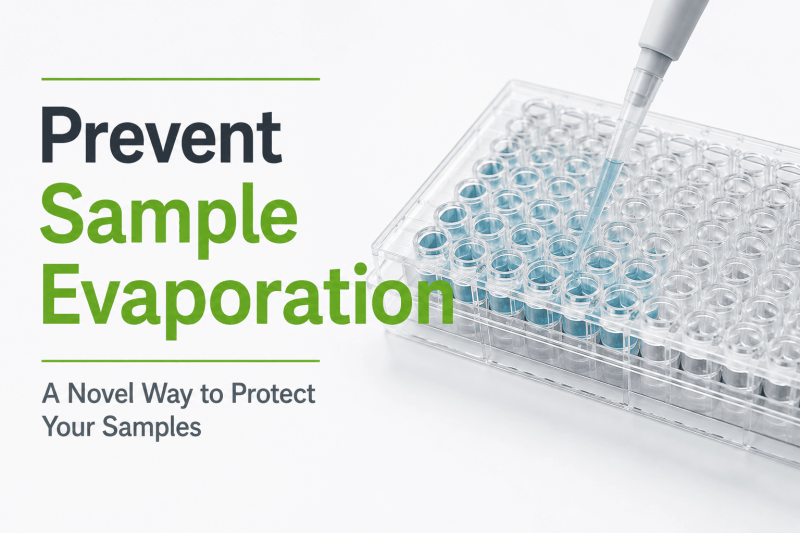
Microplates are widely used in life science, pharmaceutical, and analytical laboratories. However, solvent evaporation can compromise sample integrity, analytical accuracy, and experimental reproducibility, especially when sample volumes are low or plates remain exposed for extended periods.
This article explains why sample evaporation matters, examines the conditions that increase solvent loss, compares common prevention methods, and explores a novel approach that keeps the plate covered while individual wells remain accessible.
Key Takeaways
- Sample evaporation can change concentration and reduce reproducibility in microplate workflows.
- The right plate seal can help reduce evaporation without changing the overall workflow.
- RAPID Slit Seal™ helps prevent sample evaporation by allowing repeated sample access without removing the seal.
Interested in trying this novel approach?
RAPID Slit Seal™ samples are available for laboratory evaluation.
Request a Free Sample →
Why Does Sample Evaporation Matter?
Sample evaporation does more than reduce the amount of liquid in each well. Even small volume changes can affect concentration, analytical accuracy, and reproducibility, particularly in low-volume microplate workflows.
Changes in Sample Concentration
As solvent evaporates, the remaining analytes become more concentrated. This may affect quantitative measurements, calibration results, and downstream analyses.
Reduced Reproducibility
Uneven evaporation across a microplate may cause samples prepared under the same conditions to produce different results. This can complicate troubleshooting and make experiments more difficult to reproduce.
Loss of Valuable Samples
For precious or low-volume samples, evaporation may leave insufficient material for repeat analysis or confirmation testing.
Key Point: Preventing sample evaporation helps maintain sample concentration, improve reproducibility, and preserve valuable material for further analysis.
Why Does Sample Evaporation Occur in Microplates?
Sample evaporation is influenced by several environmental and workflow-related factors. Understanding these causes helps laboratories choose a more appropriate evaporation prevention strategy.
Low Sample Volumes
Modern analytical workflows often use only a few microliters of sample. At these volumes, even a small amount of solvent loss can represent a meaningful percentage of the total volume and change sample concentration.
Temperature
Higher temperatures increase solvent evaporation during incubation, sample preparation, or storage. Even room-temperature exposure can become significant when plates remain uncovered for extended periods.
Airflow
Air movement in fume hoods, biosafety cabinets, laboratory ventilation systems, or around analytical instruments removes solvent vapor from above the liquid surface and allows evaporation to continue.
Extended Waiting Times
Samples may remain on an autosampler tray, laboratory bench, or storage rack for hours before analysis is complete. Gradual evaporation during this period can create differences between samples measured at the beginning and end of a sequence.
Repeated Plate Access
Repeated pipetting or automated sampling can expose wells multiple times throughout a workflow, increasing the opportunity for solvent loss if the sealing method is not designed for repeated access.
Key Point: Sample evaporation is influenced not only by environmental conditions, but also by how samples are accessed throughout the workflow. Choosing the right sealing solution is therefore as important as controlling temperature and storage conditions.
Common Solutions for Preventing Sample Evaporation
Several sealing solutions are used to reduce sample evaporation in microplates. The most suitable option depends on the required sealing performance, storage period, plate format, and how frequently samples need to be accessed.
Adhesive Plate Seals
Adhesive plate seals are widely used because they are easy to apply and available in a variety of materials for storage, incubation, and analytical workflows.
However, conventional adhesive seals often need to be removed or peeled back when samples are accessed. Repeated handling can interrupt the workflow, expose neighboring wells, and reduce sealing consistency.
In some analytical applications, laboratories also prefer to minimize direct contact between samples and adhesive materials because of concerns about potential contamination or unintended interactions. This consideration is particularly relevant for valuable samples and highly sensitive analyses.
Foil Seals
Foil seals can provide a strong barrier against evaporation and contamination, making them useful for storage and other applications requiring limited moisture or gas exchange.
Many foil seals are intended for single use. Once pierced or removed, they may not provide the same level of protection, which can make them less practical for workflows requiring frequent sample access.
Silicone Mats
Silicone mats can provide a tight seal and strong evaporation protection. Some are available with pre-slit designs, allowing repeated access with pipette tips or needles without removing the mat.
When selecting a silicone mat, check solvent compatibility, plate fit, and suitability for the intended sampling system, as these can vary by product.
| Solution | Evaporation Prevention | Repeated Sample Access | Automation Compatibility |
|---|---|---|---|
| Conventional Adhesive Plate Seal | Good | Seal may need to be removed or peeled back | Depends on seal type |
| Foil Seal | High | Often intended for single use | Depends on pierceability and instrument setup |
| Silicone Mat | High | Pre-slit types allow repeated access | Depends on mat and instrument setup |
| RAPID Slit Seal™ | Designed to reduce evaporation | No seal removal required for pipette or needle access | Suitable for automated sampling workflows |
Conventional sealing methods each have their own strengths. However, laboratories that repeatedly access samples often need to balance evaporation prevention with workflow efficiency. Instead of removing the seal each time, the plate can remain covered throughout the workflow.
Why RAPID Slit Seal™ Helps Prevent Sample Evaporation
RAPID Slit Seal™ is an adhesive plate seal with precision-cut slits positioned over the wells. Pipette tips and autosampler needles can pass through the slits while the rest of the microplate remains covered.
This design helps reduce unnecessary exposure during repeated handling. Instead of peeling back or removing the entire plate seal, users can access individual wells while maintaining coverage across the plate.
No Need to Remove the Entire Seal
With many conventional adhesive plate seals, accessing samples requires peeling back or removing part of the seal. This can expose multiple wells even when only one sample needs to be accessed.
RAPID Slit Seal™ allows access through the slit above each well, helping the surrounding wells remain covered during pipetting or automated sampling.
Repeated Access with Less Sample Exposure
Repeated pipetting and analytical sampling can increase the time that samples are exposed to the surrounding environment. By keeping the plate covered between access points, RAPID Slit Seal™ helps limit exposure that may contribute to sample evaporation.
Suitable for Pipettes and Autosampler Needles
The pre-cut slits are designed to allow pipette tips and autosampler needles to enter individual wells. This makes RAPID Slit Seal™ suitable for both manual sample handling and automated analytical workflows.
Reduced Adhesive Contact with Sampling Tools
Because the pipette tip or needle passes through a pre-cut slit rather than piercing directly through an adhesive surface, RAPID Slit Seal™ can help reduce contact between the sampling tool and the adhesive layer.
The area directly above each well is designed without adhesive, helping minimize contact between the sample and adhesive materials while allowing direct access through the slit. This can be beneficial in workflows where adhesive transfer or potential sample interaction is a concern.
How it helps: RAPID Slit Seal™ helps prevent sample evaporation by keeping the microplate covered during repeated pipetting or automated sampling, without requiring the seal to be removed each time.
See How RAPID Slit Seal™ Fits Your Workflow
Evaluate RAPID Slit Seal™ with your own microplates, samples, and analytical workflow.
Typical Applications
RAPID Slit Seal™ is particularly useful in workflows that require repeated access to individual wells while the rest of the microplate remains covered.
LC-MS and HPLC Analysis
Microplates may remain on an autosampler for extended periods while samples are analyzed sequentially. Keeping wells covered between injections can help reduce solvent loss and concentration changes during the analytical run.
Compound Libraries
Compound libraries often require samples to be accessed more than once. Individual-well access helps users retrieve selected samples without repeatedly uncovering the entire plate.
Drug Discovery and High-Throughput Workflows
Screening and sample-preparation workflows may involve repeated pipetting, transfers, or automated sampling. A seal that remains on the plate can reduce additional handling while supporting efficient access to individual wells.
Routine Sample Handling
Laboratories may also use RAPID Slit Seal™ for routine workflows in which a microplate must stay covered while samples are added, removed, or measured at different stages.
Application Tip: RAPID Slit Seal™ is most relevant when repeated pipetting or autosampler access makes it impractical to remove and replace a conventional seal throughout the workflow.
Frequently Asked Questions
What causes sample evaporation in microplates?
Sample evaporation is influenced by sample volume, temperature, airflow, waiting time, and how frequently the plate is accessed. Low-volume samples are particularly sensitive because even a small absolute loss can noticeably change concentration.
How can sample evaporation be reduced in 96-well plates?
Using an appropriate sealing solution, limiting unnecessary exposure, controlling temperature and airflow, and reducing waiting time can all help. The best option depends on whether the plate is stored, incubated, manually handled, or accessed by an autosampler.
Can samples be accessed without removing the plate seal?
Yes. RAPID Slit Seal™ has precision-cut slits that allow pipette tips or autosampler needles to access individual wells without removing the entire seal.
How is RAPID Slit Seal™ different from a conventional adhesive plate seal?
A conventional adhesive plate seal may need to be peeled back, removed, or pierced through the adhesive layer. RAPID Slit Seal™ provides pre-cut openings over the wells, allowing samples to be accessed while the surrounding plate remains covered.
Is RAPID Slit Seal™ compatible with autosamplers?
RAPID Slit Seal™ is designed for access by autosampler needles as well as pipette tips. Compatibility should still be evaluated with the specific plate, needle, instrument, and analytical conditions used in the laboratory.
Does a plate seal completely stop sample evaporation?
No sealing solution should be assumed to eliminate evaporation under every condition. Performance can vary with solvent, temperature, plate type, storage time, seal application, and the number of times samples are accessed.
Evaluate RAPID Slit Seal™ in Your Laboratory
See how RAPID Slit Seal™ performs with your own microplates, samples, and analytical workflow.
Related Resources
RAPID Slit Seal™ Product Page
Review product features, available formats, and application information for RAPID Slit Seal™.
Customer Testimonial: Plate Seal Application
Read how a customer uses a BioChromato plate-sealing product in a laboratory workflow.
Customer Testimonial: Laboratory Plate Sealing
Explore another customer example involving plate sealing, sample handling, and laboratory analysis.
A Novel Approach to Reducing Needle Clogging in Microplate Autosampling
Learn how RAPID EPS™ helps reduce adhesive-related needle clogging in microplate autosampling workflows.