
How Far Has Evaporation Automation Come?
Post date : May 12, 2026 Update date : May 12, 2026
A Comparison of V-10, EZ-2, and Modern Automated Evaporation Systems
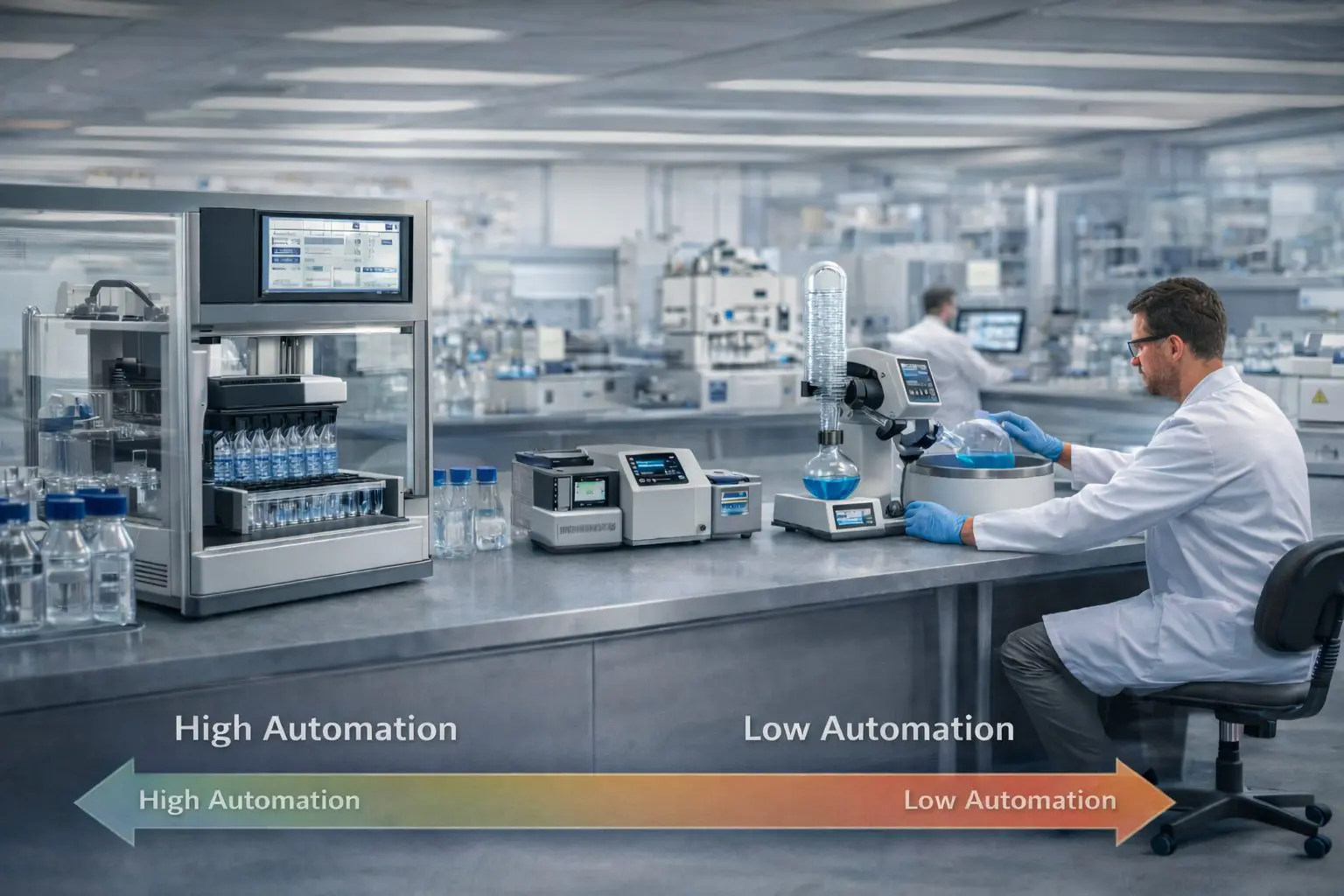
Evaporation is one of the most common steps in chemistry and life-science laboratories, yet it remains one of the least automated parts of many workflows.
Modern laboratories routinely use automated instruments for chromatography, sample preparation, and analytical measurements. However, solvent evaporation often still requires manual setup and monitoring.
This article explores how evaporation automation has evolved by examining several representative technologies used in modern laboratories and placing them within the broader landscape of laboratory automation.
Editorial Note
This article provides a technical overview of evaporation technologies and automation approaches. It is not intended to evaluate or rank specific instruments. Product names are mentioned only as examples of representative technologies used in laboratory evaporation workflows.
Quick Answer
Solvent evaporation in modern laboratories is partially automated but rarely fully autonomous, although some specialized systems can operate in an almost fully automated, walk-away manner for defined applications.
Many evaporation systems can automatically control vacuum pressure, detect drying endpoints, process multiple samples, and run programmed evaporation methods.
However, evaporation behavior depends strongly on solvent properties, sample composition, and container geometry. Because of this variability, most workflows still require method setup and operator judgment.
Today’s evaporation technologies generally fall into three automation approaches:
- Centrifugal evaporators — often used in robotic or unattended workflows
- Parallel nitrogen evaporation systems — designed for high-throughput sample processing
- Rotary evaporators with automated vacuum control — improving traditional solvent removal
Overall, evaporation automation has progressed significantly, yet fully autonomous solvent evaporation that works robustly across diverse solvents, sample matrices, and container formats remains uncommon.
Table of Contents
1. Why Evaporation Automation Matters
2. Major Types of Laboratory Evaporation Technologies
3. Centrifugal Evaporation Systems
4. Parallel Nitrogen Evaporation Systems
5. Rotary Evaporation With Automatic Vacuum Control
1. Why Evaporation Automation Matters
Evaporation automation matters because manual evaporation can slow laboratory workflows and require continuous attention.
Solvent evaporation appears in many research workflows, including:
- drug discovery
- environmental analysis
- metabolomics
- food safety testing
- chemical synthesis
Traditional evaporation often requires:
- manual vacuum adjustments
- monitoring to prevent bumping
- repeated setup steps
- long evaporation times
These factors can create a bottleneck in otherwise automated laboratory workflows.
Automation technologies aim to reduce manual intervention and improve laboratory efficiency.
2. Major Types of Laboratory Evaporation Technologies
Laboratory evaporation technologies generally fall into four main approaches, each designed for different workflows.
| Technology Type | Evaporation Principle | Representative Systems | Typical Applications |
|---|---|---|---|
| Centrifugal evaporation | Vacuum + centrifugal force | Genevac™ Auto HT-12, Genevac™ EZ-2 4.0 Bionic, Biotage® V-10 | Drug discovery, Medicinal chemistry, Environmental analysis, Clinical and food testing |
| Nitrogen blowdown evaporation | Nitrogen-assisted evaporation with controlled sample heating | SuperVap® systems, TurboVap® systems, RayKol Auto EVA 80 | Analytical laboratories |
| Rotary evaporation | Vacuum + rotating flask | LabTech® EV311VAC Rotary Evaporator, VARIO® pump + VACUU·SELECT® | Chemical synthesis and general solvent removal |
Evaporation Workflow Automation Spectrum
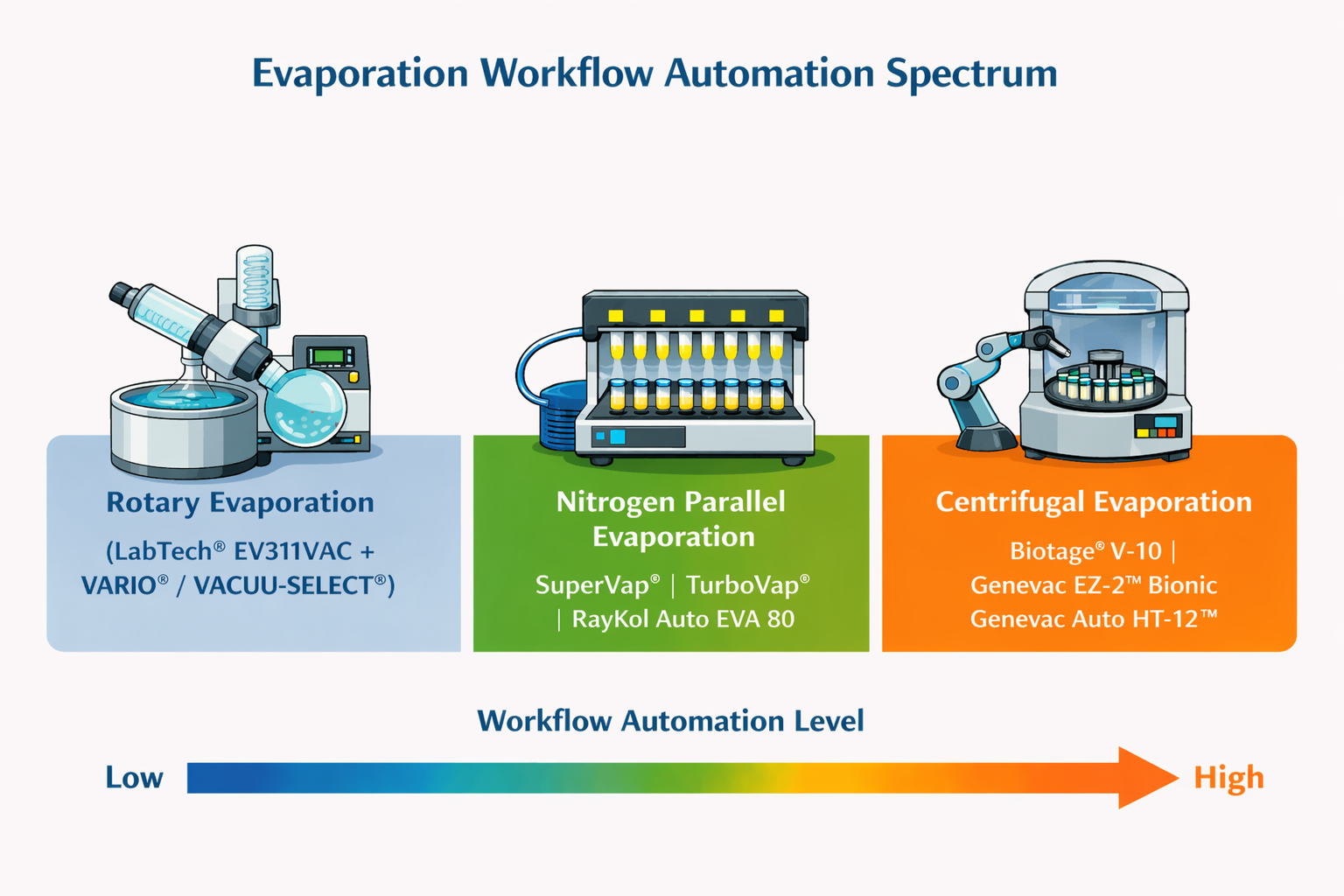
Figure 1. Laboratory Evaporation Workflow Automation Spectrum
This spectrum illustrates how evaporation technologies range from semi-manual systems to highly automated robotic workflows.
* This automation scale is intended as a conceptual spectrum rather than a strict quantitative ranking. The relative position of each technology may vary depending on the manufacturer, configuration, and system setup.
3. Centrifugal Evaporation Systems
Centrifugal evaporators provide among the most advanced levels of automation in solvent evaporation workflows.
Genevac™ EZ-2 4.0 Bionic
Key features include:
- can be integrated into automated or robotic workflows
- automated lid operation
- programmed evaporation methods
- unattended evaporation cycles
These systems are commonly used in drug discovery laboratories.
Genevac™ Auto HT-12
Automation capabilities include:
- robotic arm integration
- automated endpoint detection
- continuous condenser operation
- automatic shutdown
These features support extended unattended evaporation workflows.
Biotage® V-10
Biotage® V-10 focuses on rapid solvent removal, particularly for single samples.
Automation features include:
- programmed evaporation methods
- automated endpoint detection
- rapid evaporation of viscous solvents
4. Parallel Nitrogen Evaporation Systems
Parallel nitrogen evaporation systems are designed for high-throughput sample concentration.
SuperVap® systems
Key features include:
- simultaneous evaporation of multiple samples
- vortex motion evaporation
- nitrogen-assisted drying
- automated endpoint detection
These systems are widely used, particularly in environmental laboratories.
RayKol Auto EVA 80
This system offers:
- programmable evaporation methods
- automated nitrogen flow control
- parallel processing of large sample batches
TurboVap®
TurboVap® systems provide:
- automated endpoint detection
- parallel evaporation
- method-based operation
These systems are widely used in environmental, pharmaceutical, and general analytical chemistry laboratories.
5. Rotary Evaporation With Automatic Vacuum Control
Modern rotary evaporators reduce manual adjustments through automated vacuum control.
LabTech® EV311VAC Rotary Evaporator
Automation features include:
- integrated digital vacuum controller
- programmable vacuum and rotation speed
- automatic flask lifting
- automatic bath control
VARIO® Pump with VACUU·SELECT® Controller
This system provides:
- automatic boiling point detection
- dynamic pressure adjustment
- solvent-specific evaporation programs
These features simplify pressure control during rotary evaporation.
6. Summary
Evaporation automation has advanced significantly in recent years.
Current technologies include:
- robotic centrifugal evaporators
- parallel nitrogen evaporation systems
- automated rotary evaporation
- simplified bench-top evaporation approaches
Each technology addresses different laboratory needs.
While modern systems can reduce manual intervention, fully autonomous solvent evaporation across diverse solvents and laboratory conditions remains an ongoing challenge.
7. Looking Ahead
As evaporation automation continues to evolve, laboratories are increasingly looking beyond individual instruments toward more integrated and scalable workflows.
At BioChromato, we are also exploring new approaches to solvent evaporation automation to support these evolving needs.
In our next article, we will introduce BioChromato’s current approach to evaporation automation and outline how it relates to broader trends in laboratory workflows.
If you are interested in how automation could fit into your laboratory, we would be glad to continue the discussion.
References and Technology Sources
The technical information presented in this article is based on publicly available documentation and product descriptions provided by instrument manufacturers and laboratory equipment suppliers.
Representative sources include:
- Biotage® – Product information for V-10 solvent evaporation systems Automating Sample Prep Boosts Analytical Lab Efficiency
- Biotage® – TurboVap® evaporation systems
- SP Scientific / Genevac – Documentation for EZ-2 4.0 Bionic and HT-series centrifugal evaporators
- RayKol Group – Auto EVA series automated nitrogen evaporators
- LabTech S.r.l – EV311VAC rotary evaporator systems
- VACUUBRAND – VARIO® diaphragm pumps and VACUU·SELECT® vacuum controllers
Additional technical context regarding evaporation principles and solvent removal techniques is also derived from general laboratory practice described in analytical chemistry and sample preparation literature.
📚 Related Articles
- Why Evaporation Remains One of the Least Automated Lab Workflows👉 Read the full article here
Trademark Notice
Biotage® and TurboVap® are registered trademarks of Biotage AB.
Genevac™ is a trademark of SP Industries Inc. / Genevac Ltd.
SuperVap® is a registered trademark of Fluid Management Systems, Inc.
VACUU·SELECT® and VARIO® are registered trademarks of VACUUBRAND GmbH + CO KG.
Other product names are trademarks of their respective owners.