Post date : April 17, 2026 Update date : April 18, 2026
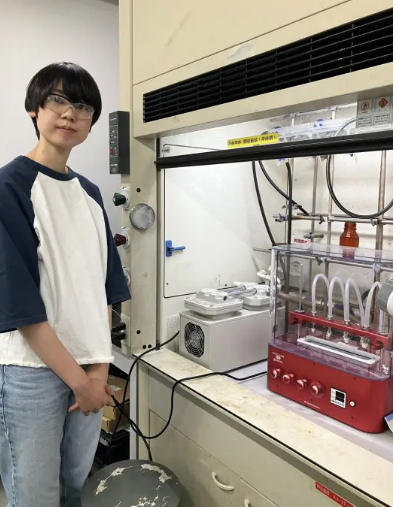
We interviewed Dr. Yukako Yoshinaga, Assistant Professor at the Suginome Laboratory, Department of Synthetic and Biological Chemistry, Graduate School of Engineering, Kyoto University, who uses the Smart Evaporator C4 for her research.
┃Topics
– Allows evaporation of up to approximately 20 samples at a time
– Easy and intuitive operation, allowing student researchers to use it immediately
– Eliminates manual work, enabling users to perform other tasks during evaporation
Learn more about the Smart Evaporator C4→
┃Research Overview and Purpose of Concentration
Our laboratory aims to develop innovative molecular transformation reactions and novel functional materials. Our research focuses on discovering new reactions and reagents based on organometallic chemistry, establishing efficient synthetic methods for organosilicon, organoboron, and other carbonophilic metal‑containing organic compounds, and achieving the precise synthesis of organic polymers with highly controlled three‑dimensional architectures.
(Quoted from the laboratory’s website)
In simple terms, our research themes are organic synthesis and polymer synthesis. In particular, we are interested in the synthesis of chiral molecules and the study of their properties.
We use the Smart Evaporator to remove reaction solvents. We remove most of the solvent using the Smart Evaporator, and then apply a vacuum to bring the samples to complete dryness. When using a rotary evaporator, post-reaction samples must be stored in round-bottom flasks, which require significant storage space, and liquid-liquid extraction also adds extra handling steps, making the overall process more time-consuming.
We see strong value in being able to collect samples prepared under various conditions, concentrate them individually, and store them directly in vial-scale containers without additional transfer steps.
View details of the Smart Evaporator C4
┃Conditions of Use for the Smart Evaporator
- Model: Smart Evaporator C4
- Containers: 20 mL vial, 4 mL vial
- Solvents: DMF, chloroform, THF, etc. / 10 mL or 2–3 mL (about half of the container volume)
- Temperature Setting: 30℃
*Higher temperatures (around 60°C) for high-boiling solvents - Frequency of Use: At least once daily
*Up to approx. 20 samples per person at peak times - Processing Time: Approximately 30 minutes per run
- Installation Location: Inside a fume hood
┃Reason for Selecting the Smart Evaporator and Its Workflow Impact
I had used the Smart Evaporator at a previous workplace, so I was already familiar with its usability. Based on that experience, I believed it would be effective for solvent removal in my current laboratory as well, and after internal discussion, we decided to introduce it.
We analyze samples using NMR and GPC. Previously, solvent removal was performed using a rotary evaporator or by manual nitrogen blowdown (injecting nitrogen directly into the container using an existing nitrogen line).
However, nitrogen blowdown in particular required constant manual operation, which I felt was inefficient. While we were able to manage small volumes, it still resulted in a significant loss of time.
With the introduction of the Smart Evaporator, this issue has been resolved. It no longer requires continuous manual attention, allowing us to focus on other tasks and significantly improving our workflow.
┃Feedback on Using the Smart Evaporator
<Advantages>
- It is very intuitive to use. At a glance, you can understand how to operate it—there is a main power switch, valves, and simple up-and-down controls—so even students can start using it immediately, which is very helpful.
Some other instruments require setting detailed operating conditions before use, and those settings can be confusing or prone to errors. They also often require experienced users to configure them, which can be time-consuming.
<Areas for Improvement>
- The exhaust noise is quite loud. It can make it difficult to hear conversations or when someone is calling you.
- It would be beneficial if larger-capacity containers could be used.
Learn more about the Smart Evaporator series
For further inquiries
Interviewer’s comment
Dr. Yoshinaga, thank you very much for taking the time despite your busy schedule. We are truly pleased to hear that the Smart Evaporator is playing a role in your research activities.
What you mentioned about how “students can intuitively understand how to use it and begin operating it immediately” reminded us of the importance of continuing to develop highly user-friendly products that support research. It also reaffirmed the expectations placed on us to deliver solutions that contribute to the advancement of research.
Thank you again for sharing your valuable insights.
(Interviewers: Kawada, Endo)